Questions about Zonk
Where do I put the phone?
On the nightstand, within arm's reach, with the microphone not covered by a pillow or a cable. Plug in the charger: a whole night of listening uses more battery than a phone that sleeps.
Does it work with the screen locked?
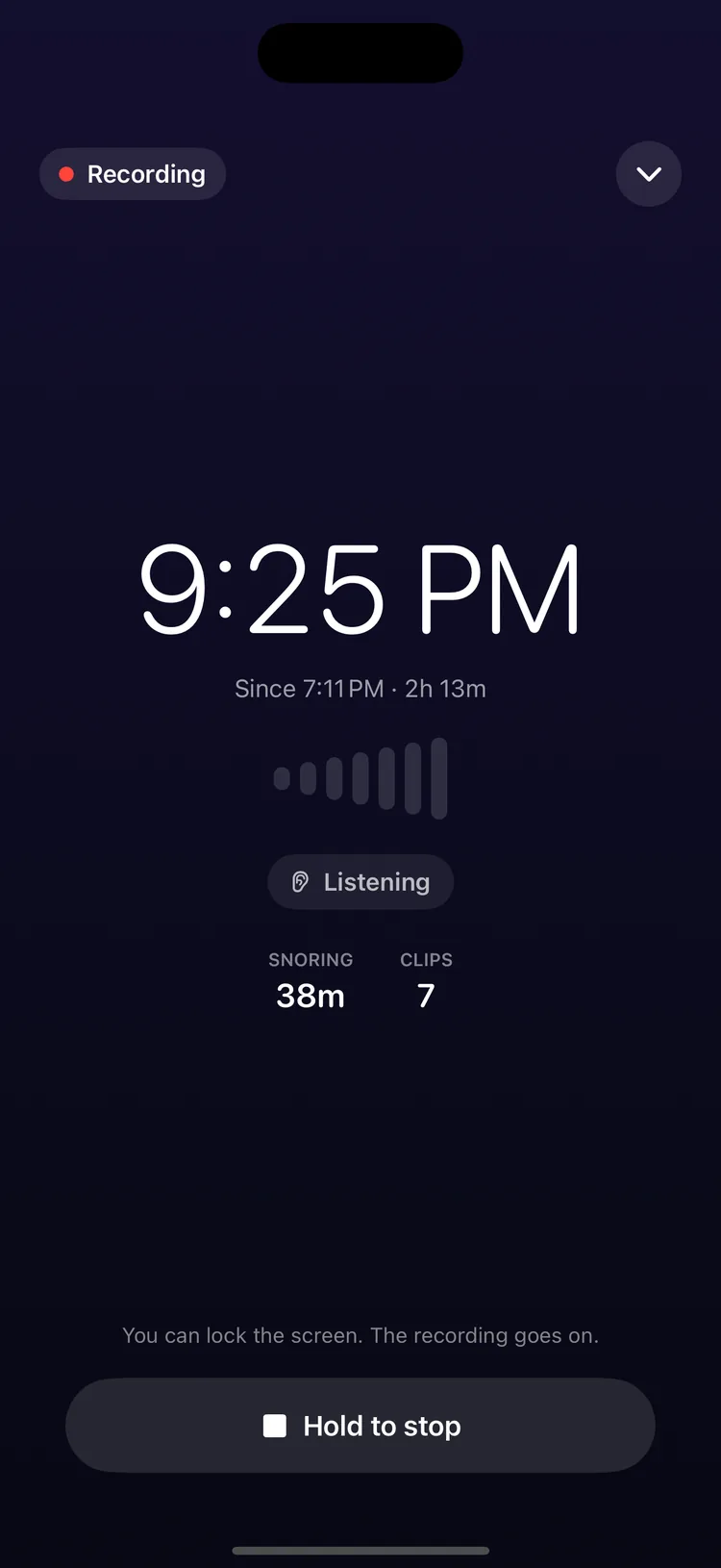
Yes. Tap Start, then lock the screen as usual. Zonk keeps listening in the background; the night screen shows a dim clock if you prefer the screen on.
What is the Snore Score?
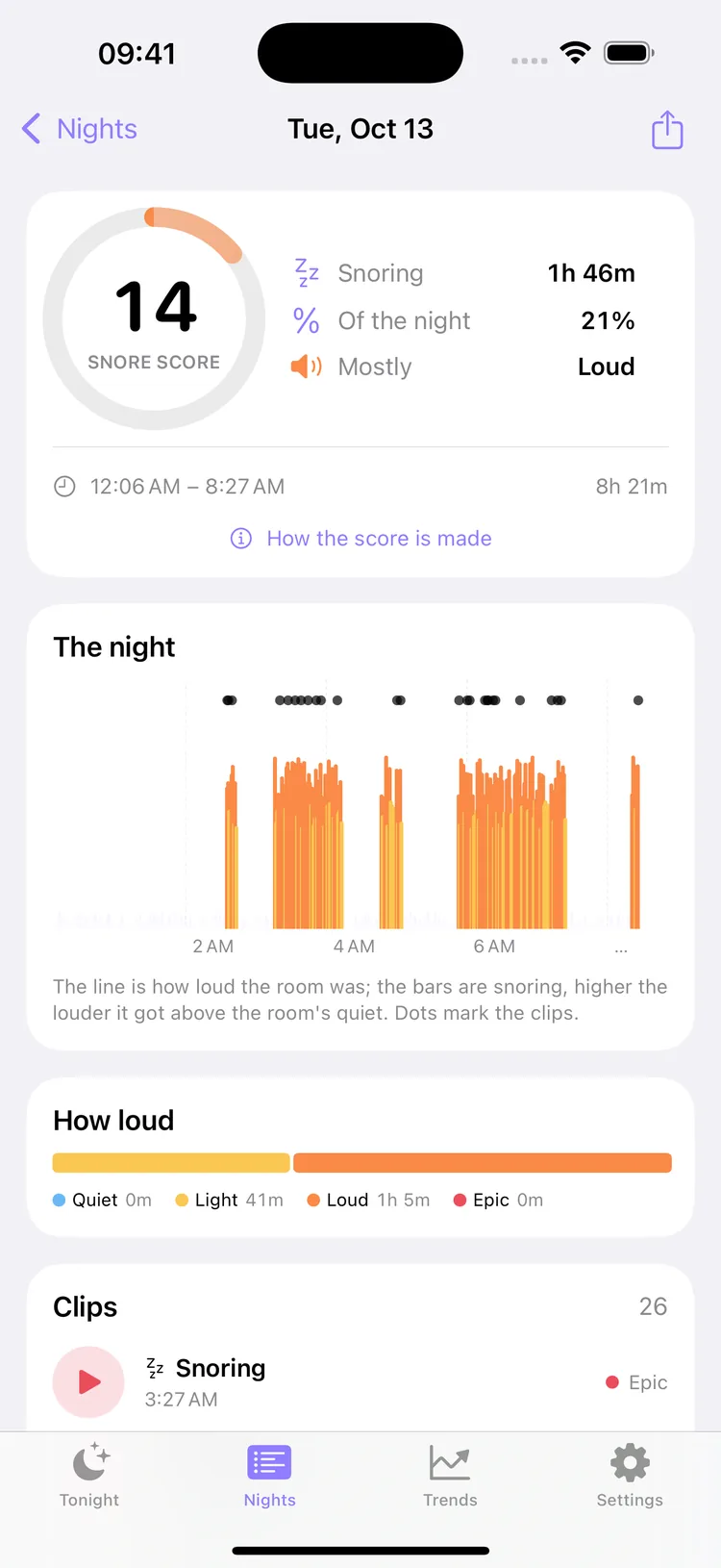
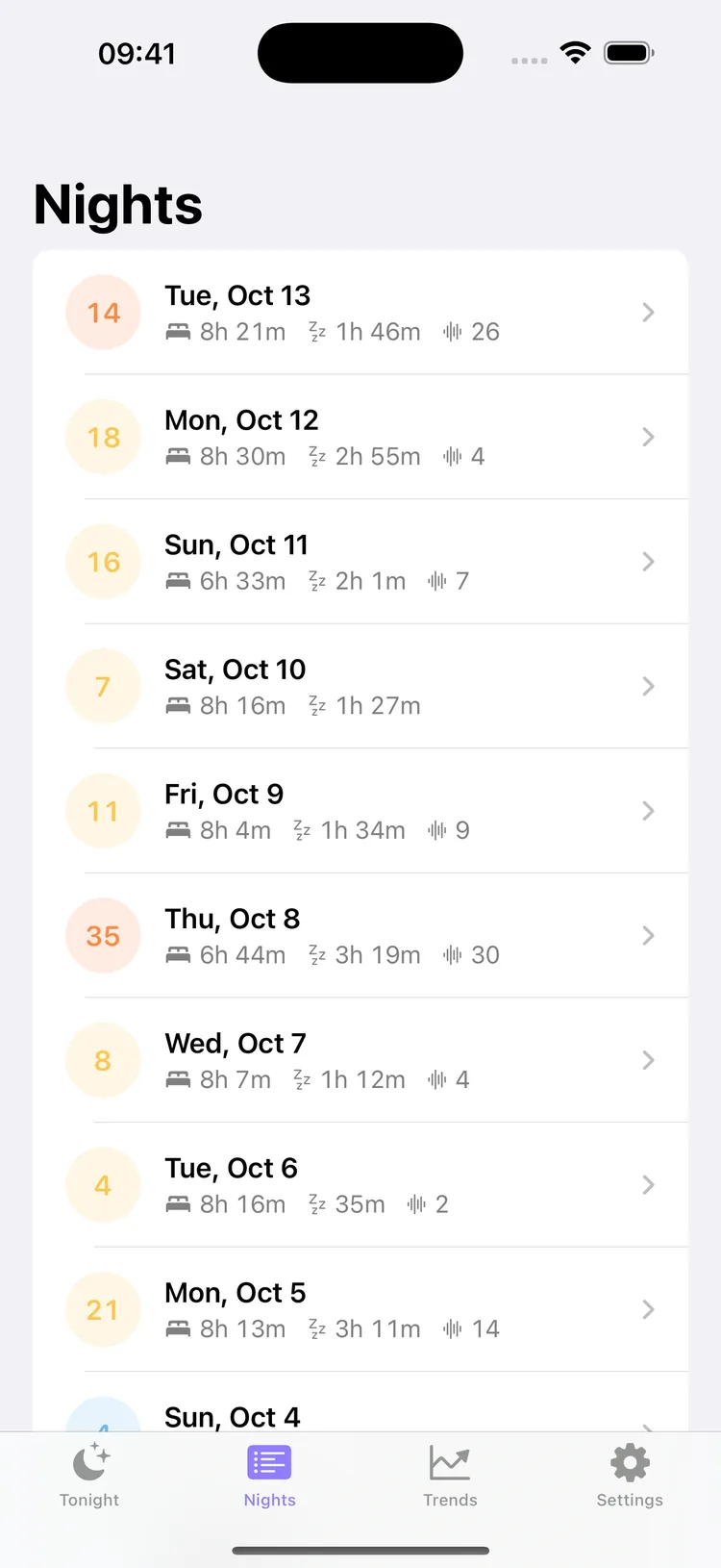
A number from 0 to 100 for one night. It multiplies how much of the night you snored by how loud the snoring was compared with the quiet of your own room, so it compares your nights with each other. Snoring half the night at a light level gives about 25; loud snoring from start to end gives 100. It isn't a medical measurement and doesn't diagnose anything.
Is the whole night recorded?
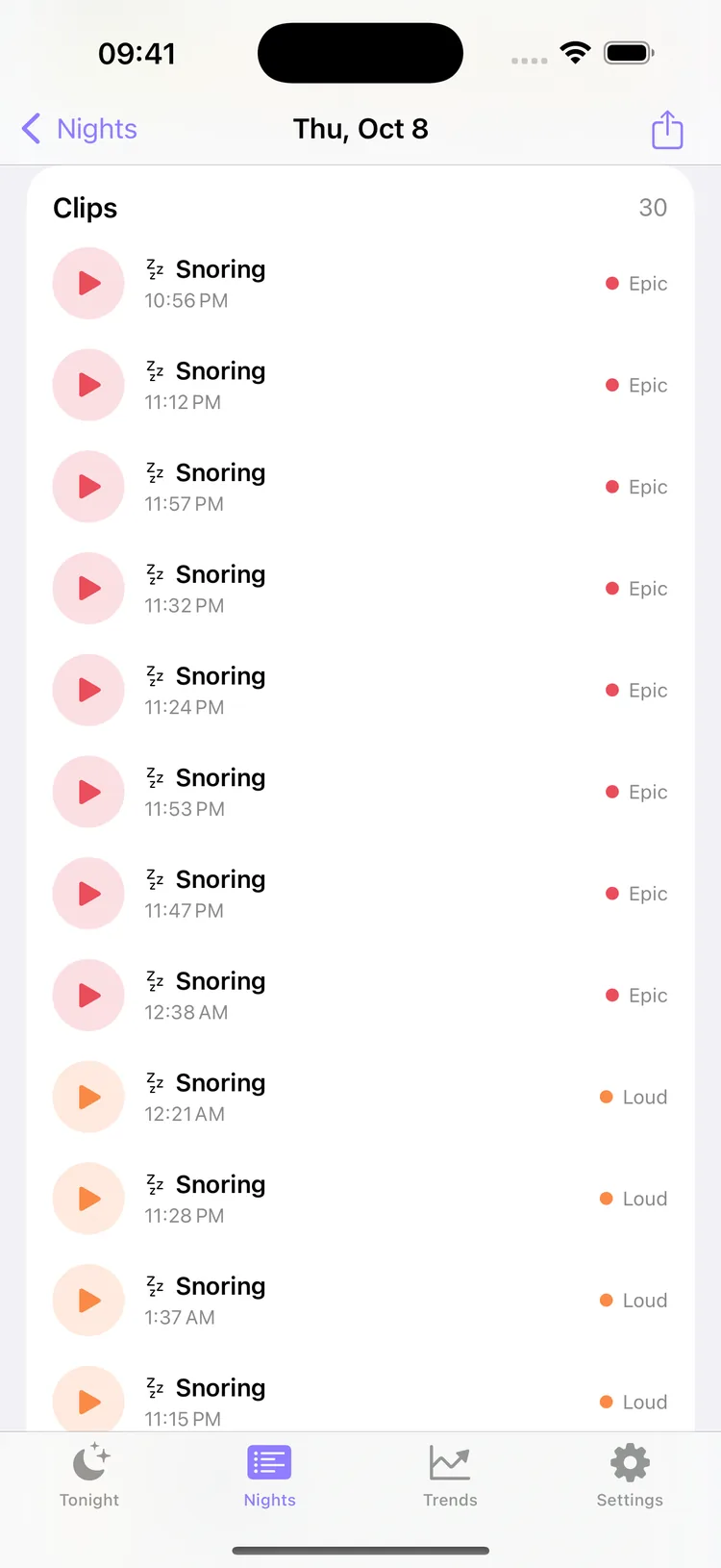
No. The audio is analyzed as it passes and thrown away. Only the loudest moments are kept, as ten-second clips, on your iPhone. You choose how many clips to keep per night and for how long.
Can my partner's snoring end up in my score?
Yes. The microphone hears everyone in the room, and Zonk cannot reliably identify who made a sound. Place the phone on your side of the bed and listen to clips for context. Ask anyone sharing the room before recording.
What about a fan or an open window?
Zonk estimates the room’s background level, but noise, microphone placement and other people can affect detection. Try a quieter position and adjust Sensitivity in Settings. Results are estimates, not calibrated sound measurements.
Does Zonk need an account or the internet?
No account is required to record a night. Audio analysis and saved night records work offline. Purchases, usage analytics in enabled builds, and the optional Daily Gift use the internet. Claiming a Daily Gift prize may require Sign in with Apple.
Is Zonk free?
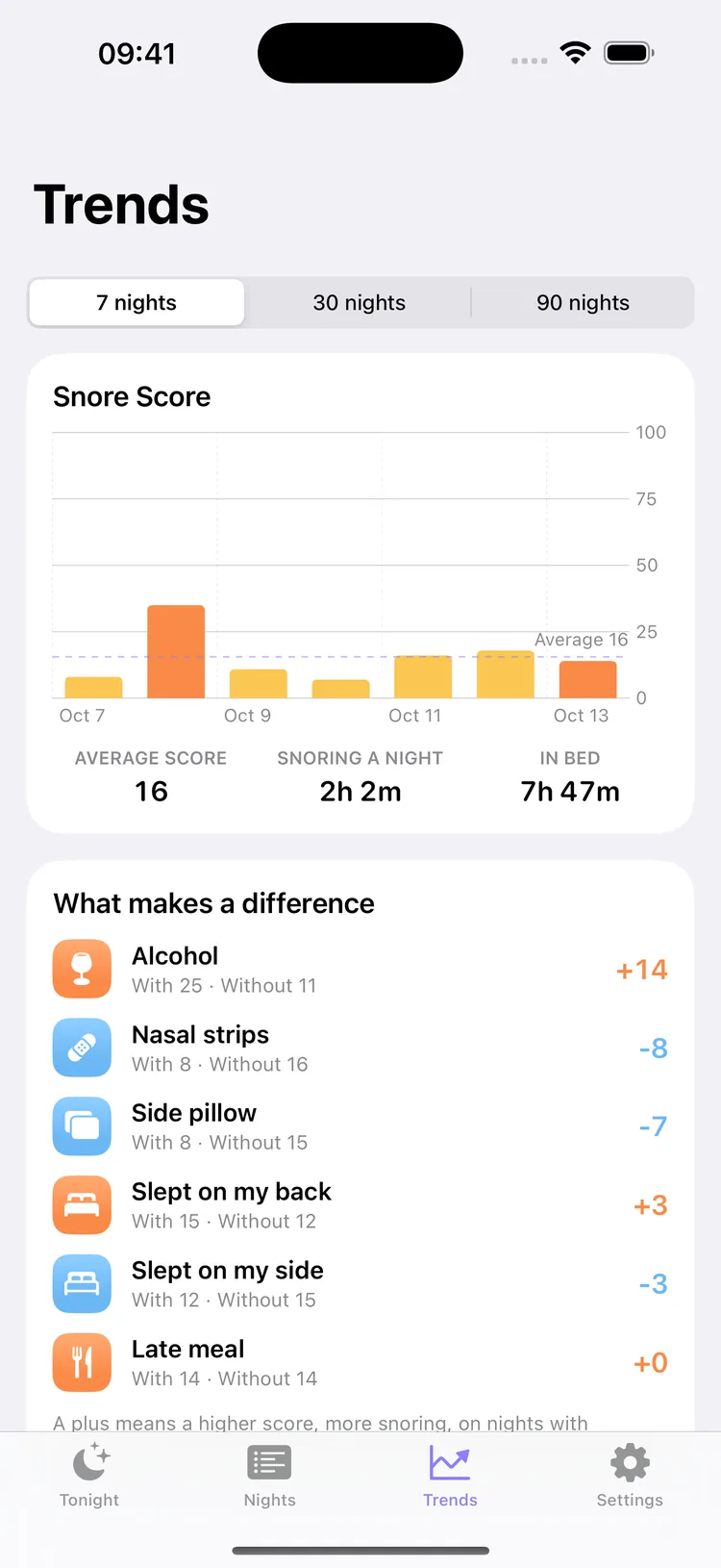
Yes. Recording every night, the Snore Score, the timeline and the three loudest clips of each of the last seven nights are free. Zonk Premium adds every night in your history, all the clips, longer trends and the factor comparison.